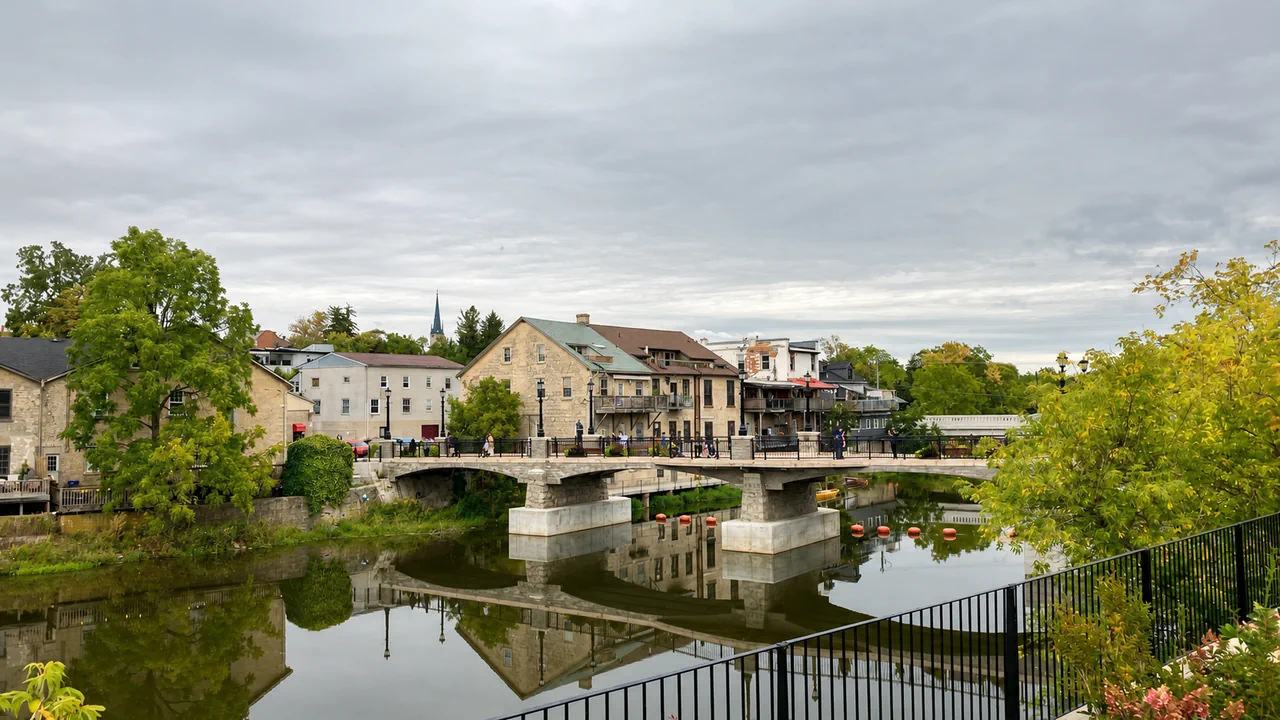
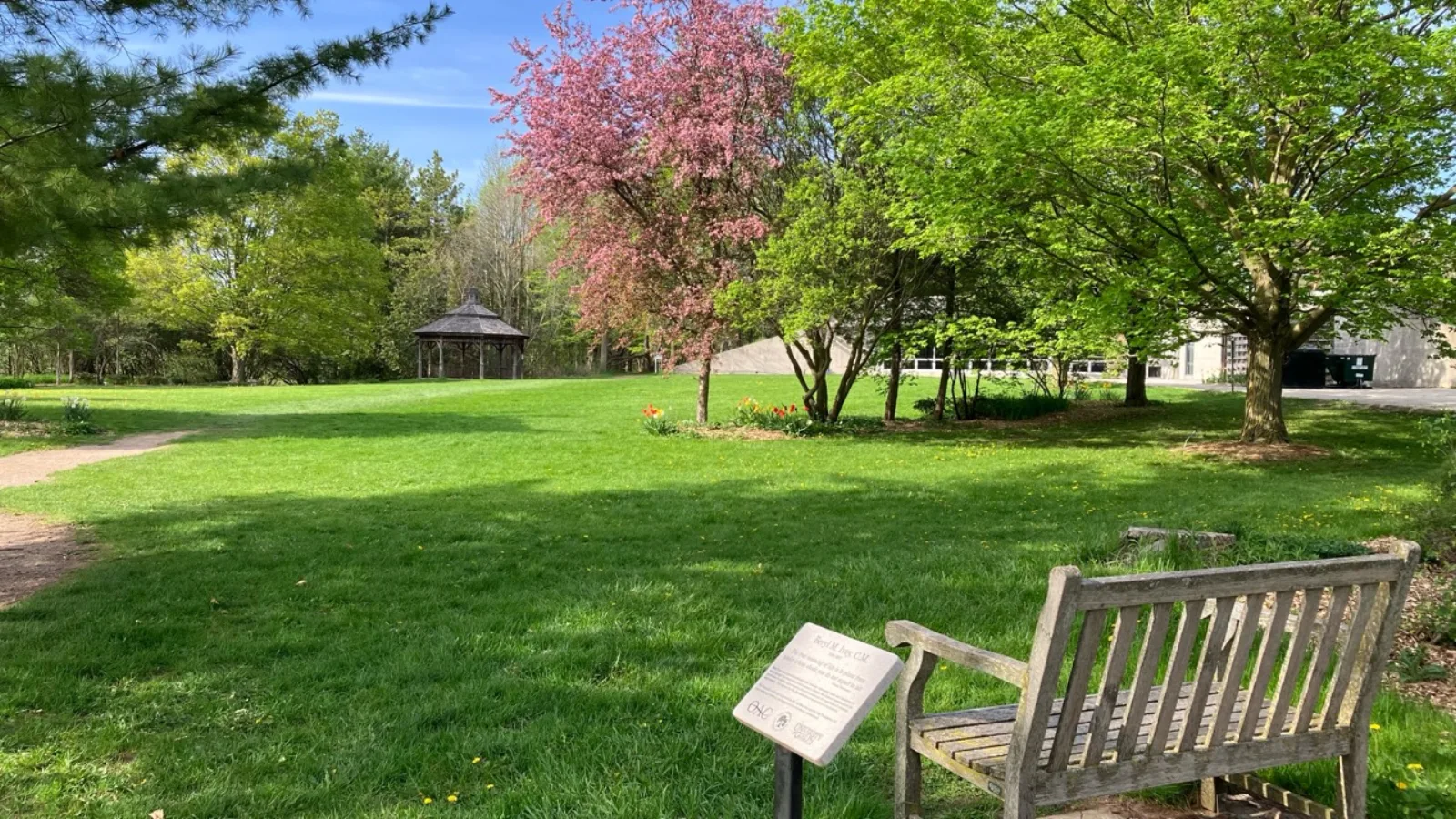
Guelph works as a day trip because two different Ontario experiences sit close together. Downtown has sloping streets, warm limestone buildings, a major Gothic Revival basilica and a rail station connected to Toronto. A short local ride away, the University of Guelph Arboretum opens into about 400 acres of gardens, tree collections, woods, wetlands and trails.
It is also unmistakably a university town. Students, cafés and campus life keep the city active, while the old core avoids feeling like another anonymous suburban plaza. Pairing downtown with the Arboretum creates a balanced day: architecture and history first, then trees and gardens.
Guelph in one day
Arrive at Guelph Central
GO Transit and VIA Rail use the downtown station at 79 Carden Street. Check your exact date because the Kitchener corridor uses changing train and bus combinations.
Walk the limestone core
See Market Square, Old City Hall, St. George's Square, Old Quebec Street Shoppes and the Basilica hill.
Finish at The Arboretum
Choose the accessible Ivey Trail, formal gardens, Japanese garden or a longer woodland loop according to time and mobility.
Why downtown Guelph looks different
John Galt selected the site in 1827 as the Canada Company's headquarters and laid out a planned town with radial streets and civic squares influenced by European planning. Indigenous people had lived in this region for roughly 11,000 years, and Guelph stands within the treaty territory of the Mississaugas of the Credit; the 1827 town plan is one chapter, not the beginning of the area's human history.
The Grand Trunk Railway reached Guelph from Toronto in 1856 and accelerated its growth. Local dolomitic limestone gave the old core a warm, visually unified character. Old City Hall, built in 1856–57 in Renaissance Revival style, is an especially clear example.
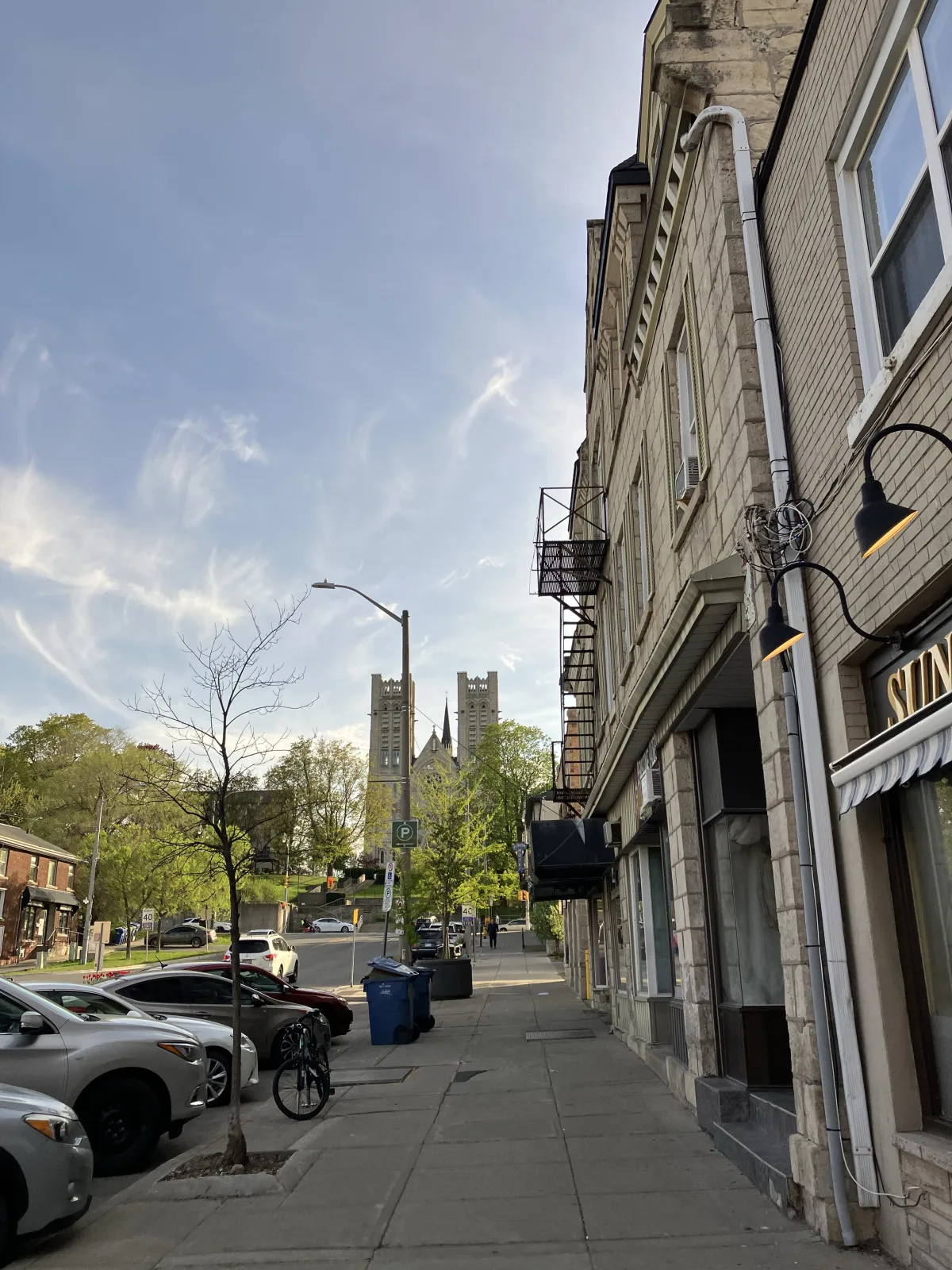
Basilica, Market Square and Old Quebec Street
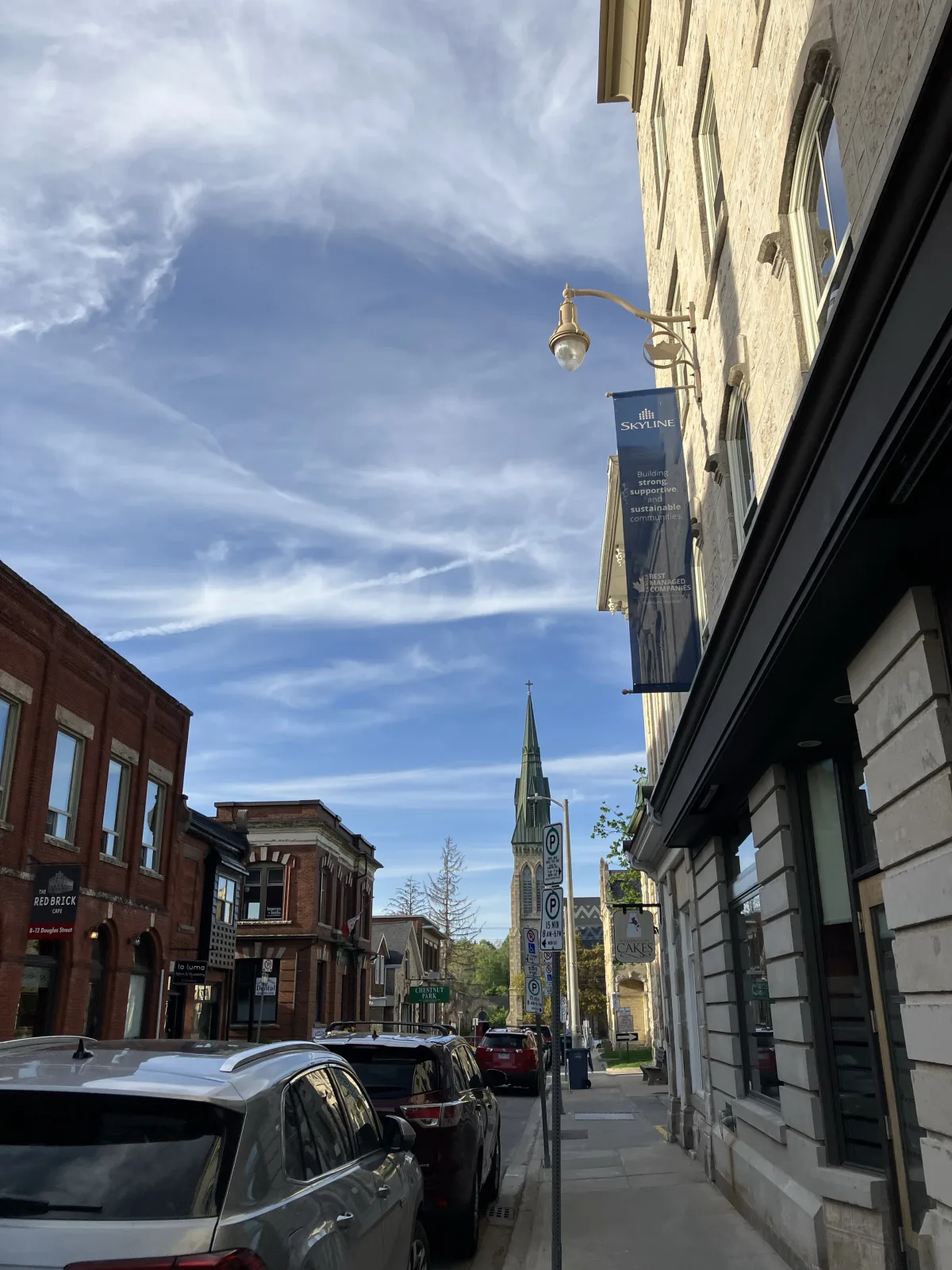
The Basilica of Our Lady Immaculate crowns the hill above downtown. Joseph Connolly designed the Gothic Revival church, built from 1876 to 1888, with twin towers, a rose window and radiating chapels influenced by medieval French cathedrals. It became a National Historic Site in 1990 and a minor basilica in 2014. The parish currently advertises tours on the first Sunday of the month from 1–3 p.m. or by appointment, but worship and events take priority.
Below the hill, today's Market Square interprets the large triangular Market Grounds in Galt's original plan. Its contemporary oval water feature becomes a skating rink in winter. Nearby, Old Quebec Street Shoppes is a modern enclosed shopping and office complex with a triangular glass facade and a connection to the Sleeman Centre. Its old-main-street mood is intentional, but the current structure is modern rather than an intact Victorian street covered by a roof.
Guelph Central: GO and VIA from Toronto
Guelph Central Station is in the useful place a visitor wants it: downtown, near Market Square and the old core. GO Transit and VIA Rail both serve the station on the Kitchener corridor, linking Guelph with Toronto Union Station and Kitchener-Waterloo through a changing mixture of trains and buses.
Do not assume every trip is direct or that the timetable is the same on weekdays and weekends. Metrolinx's two-way, all-day Kitchener Line expansion is still an improvement program. Check the current schedule, platform notices and downtown road work before travelling. VIA identifies the station as unstaffed and asks travellers who need wheelchair-lift assistance to arrange it at least 48 hours ahead.
A university town with older roots
The University of Guelph was created in 1964 from institutions with much older histories: the Ontario Agricultural College, Ontario Veterinary College and Macdonald Institute. The university reports more than 36,000 undergraduate and graduate students across its three campuses. Not all live or study in Guelph, but the main campus still gives the city the cafés, research culture and youthful rhythm of a genuine college town.
Guelph sits beside Kitchener-Waterloo on the broader Toronto–Kitchener corridor, which makes the guides useful companions. See our GO Train route from Union Station toward Kitchener-Waterloo and Stratford, the Cambridge and old Galt guide, and the Toronto Union Station guide.
The Arboretum: 400 acres of collections and trails
Established in 1970 beside the university, The Arboretum covers about 400 acres—roughly 165 hectares—with more than 12.5 kilometres of trails. It maintains more than 1,700 taxa of woody plants and functions as public garden, conservation resource and living research landscape.
Grounds are open dawn to dusk daily, year-round, with free admission and designated free visitor parking. The OAC Centennial Arboretum Centre posts weekday hours of 8:30 a.m. to 4:30 p.m. and closes on statutory holidays. The 1.1-kilometre Ivey Trail is identified as wheelchair accessible; other routes use gravel, grass, dirt, boardwalks, grades and rustic stairs, so do not assume the entire site has the same accessibility.
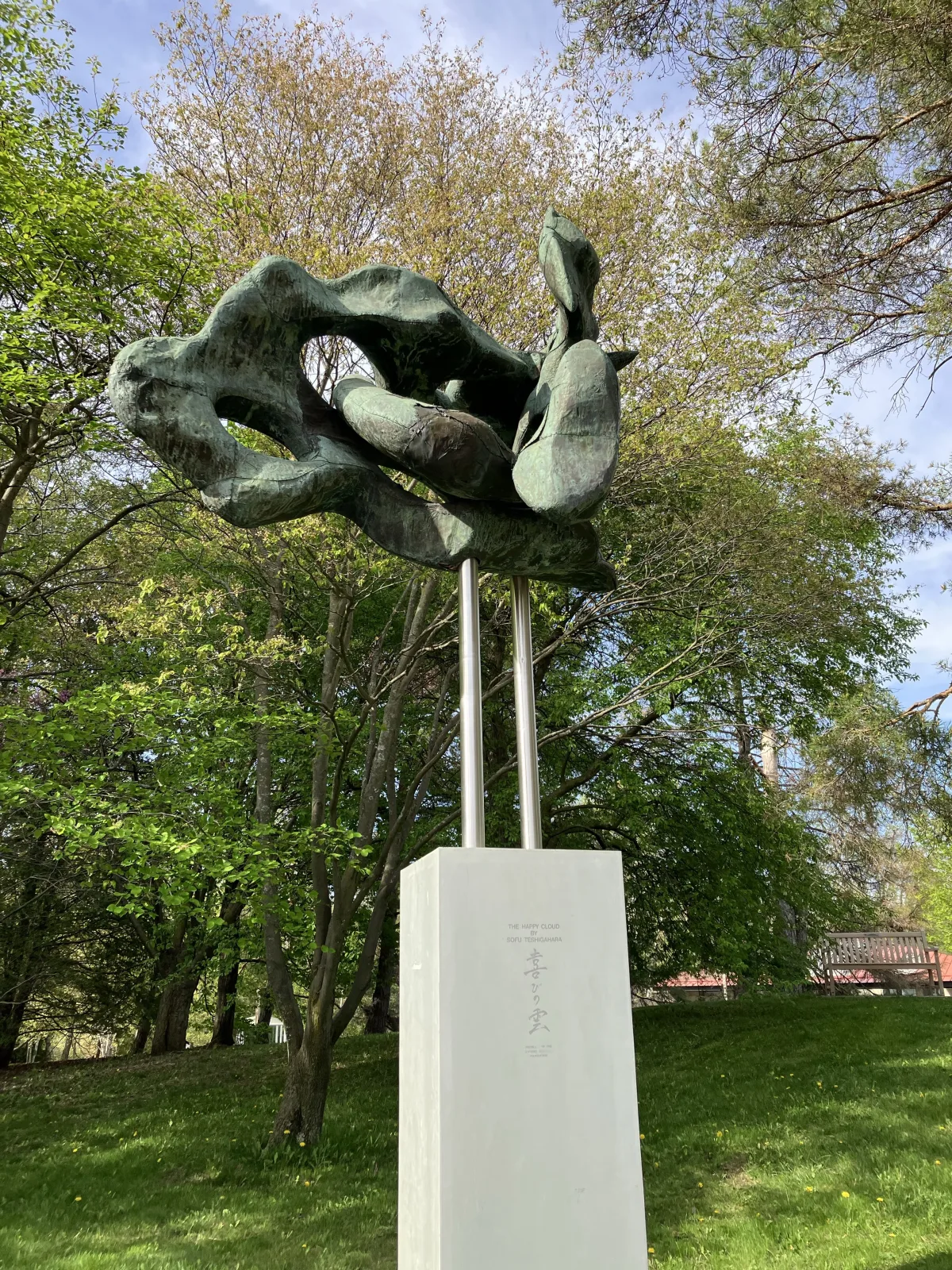
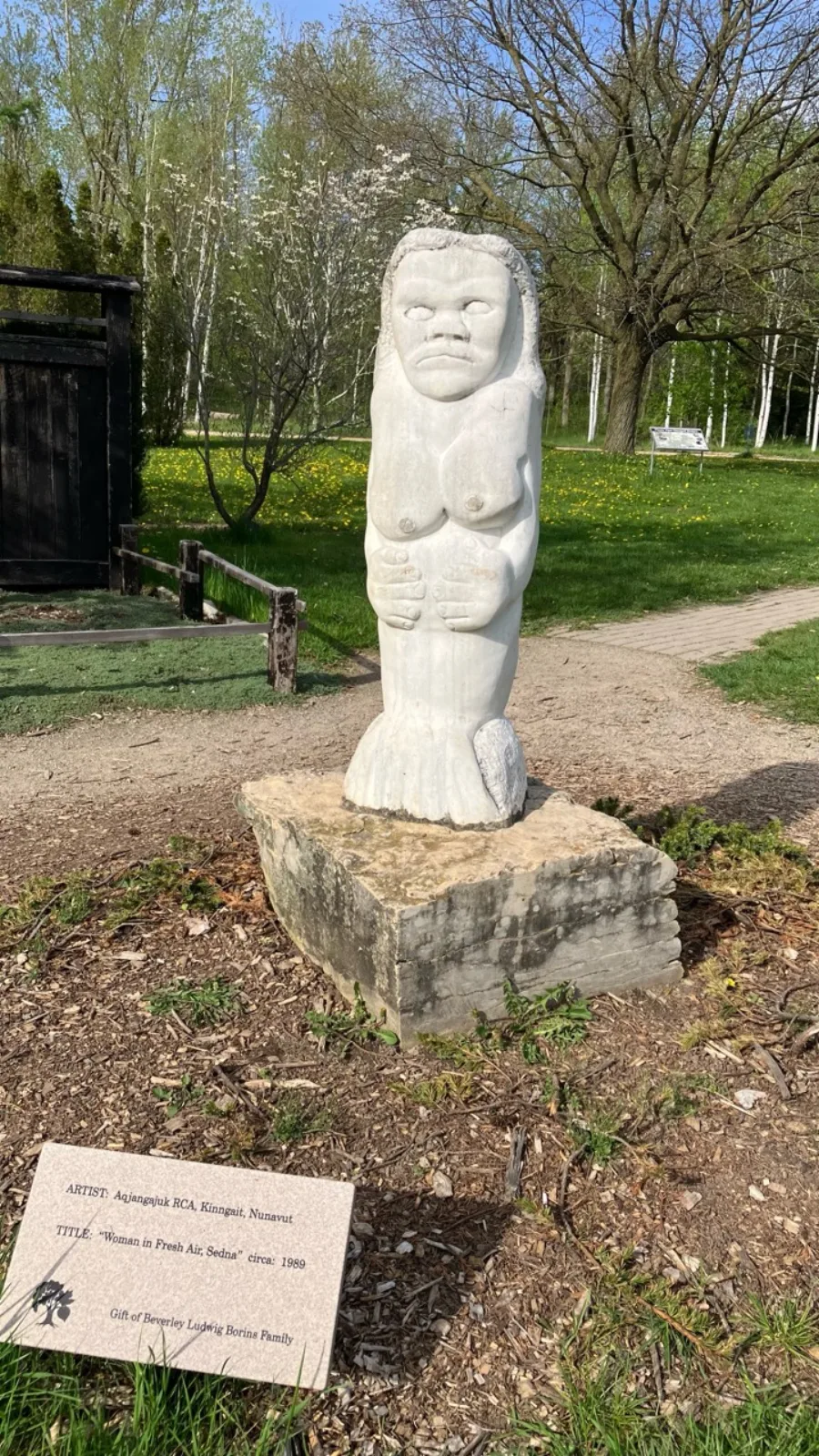
Formal, Japanese and botanical gardens
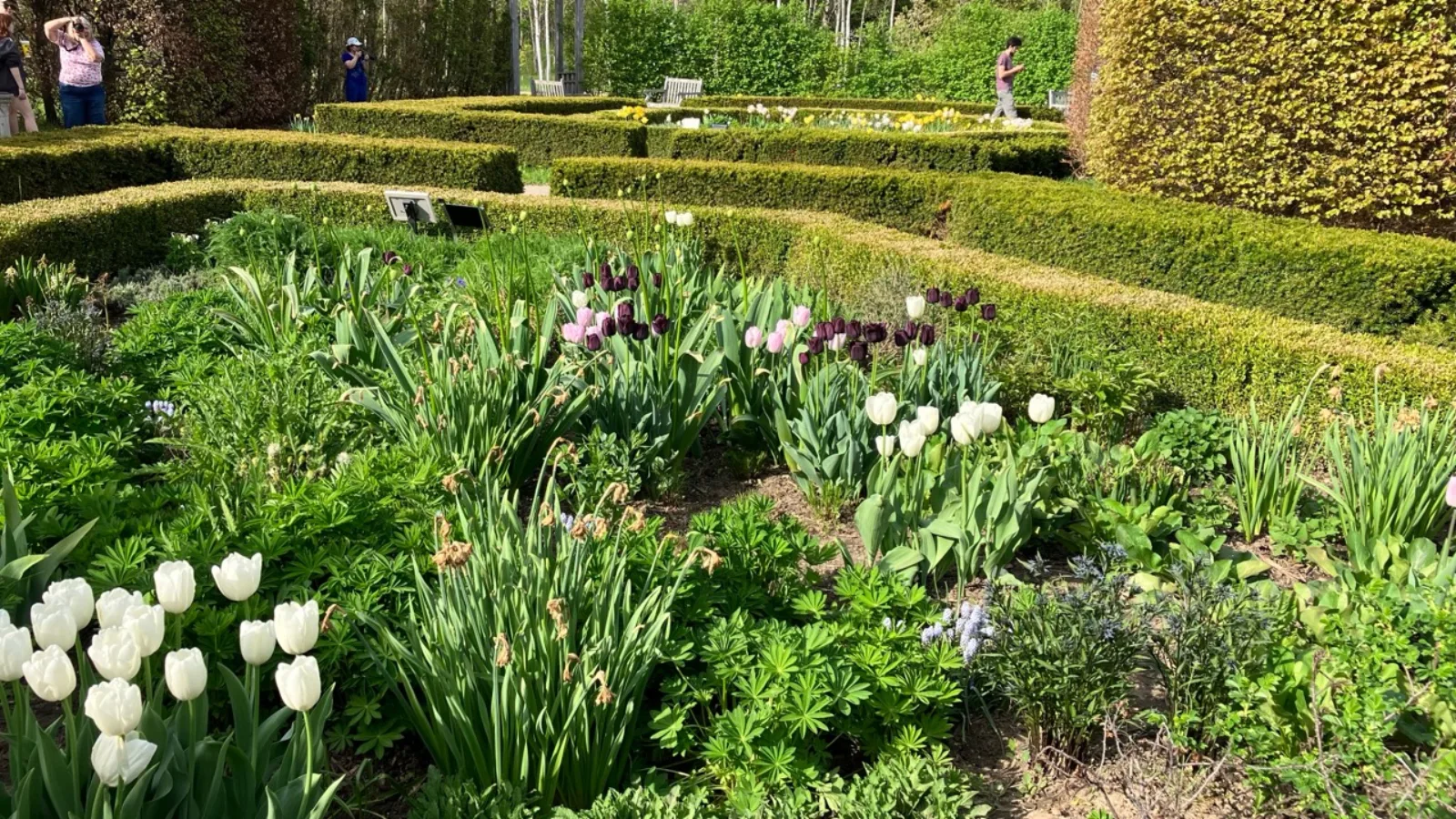
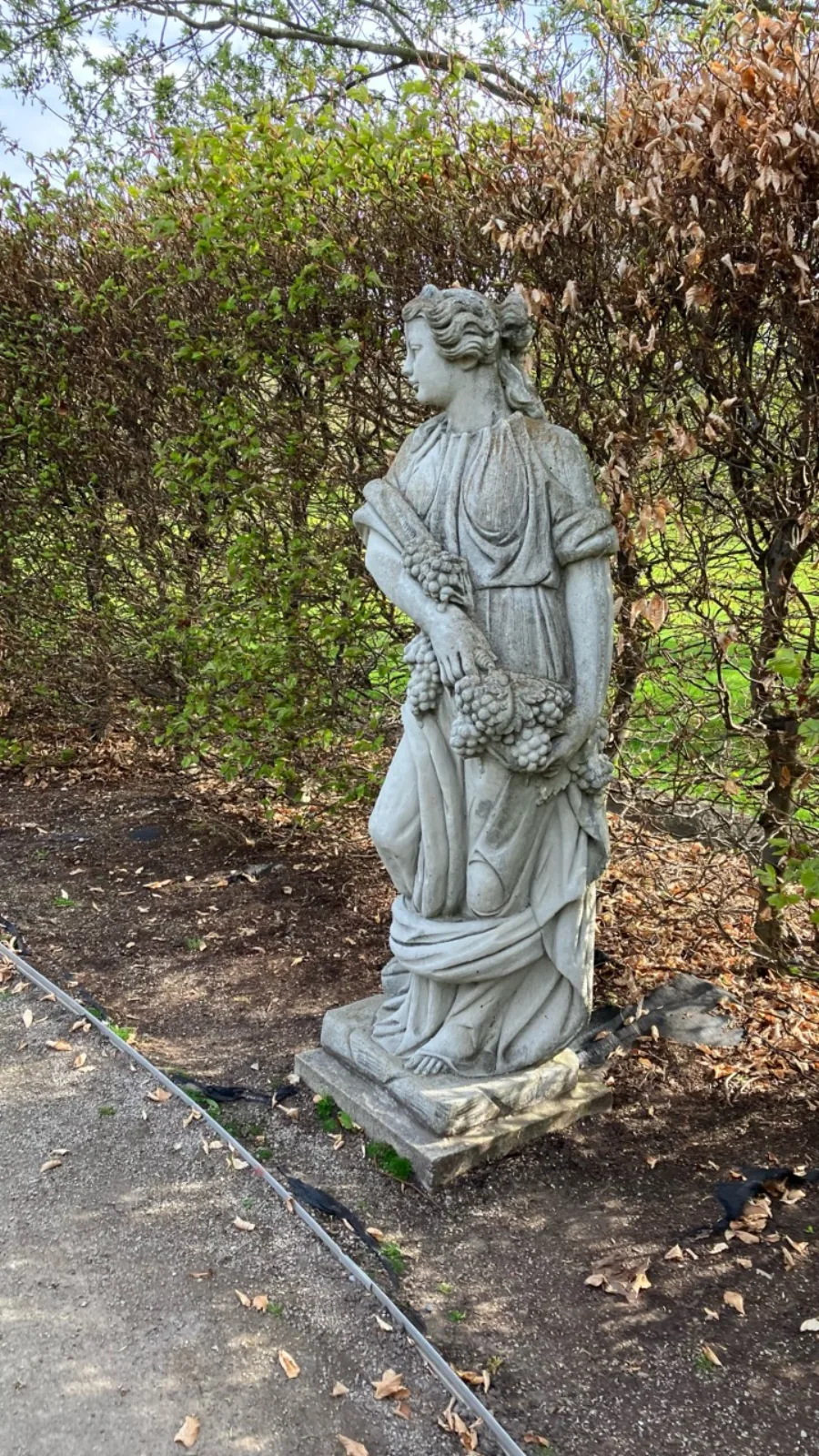
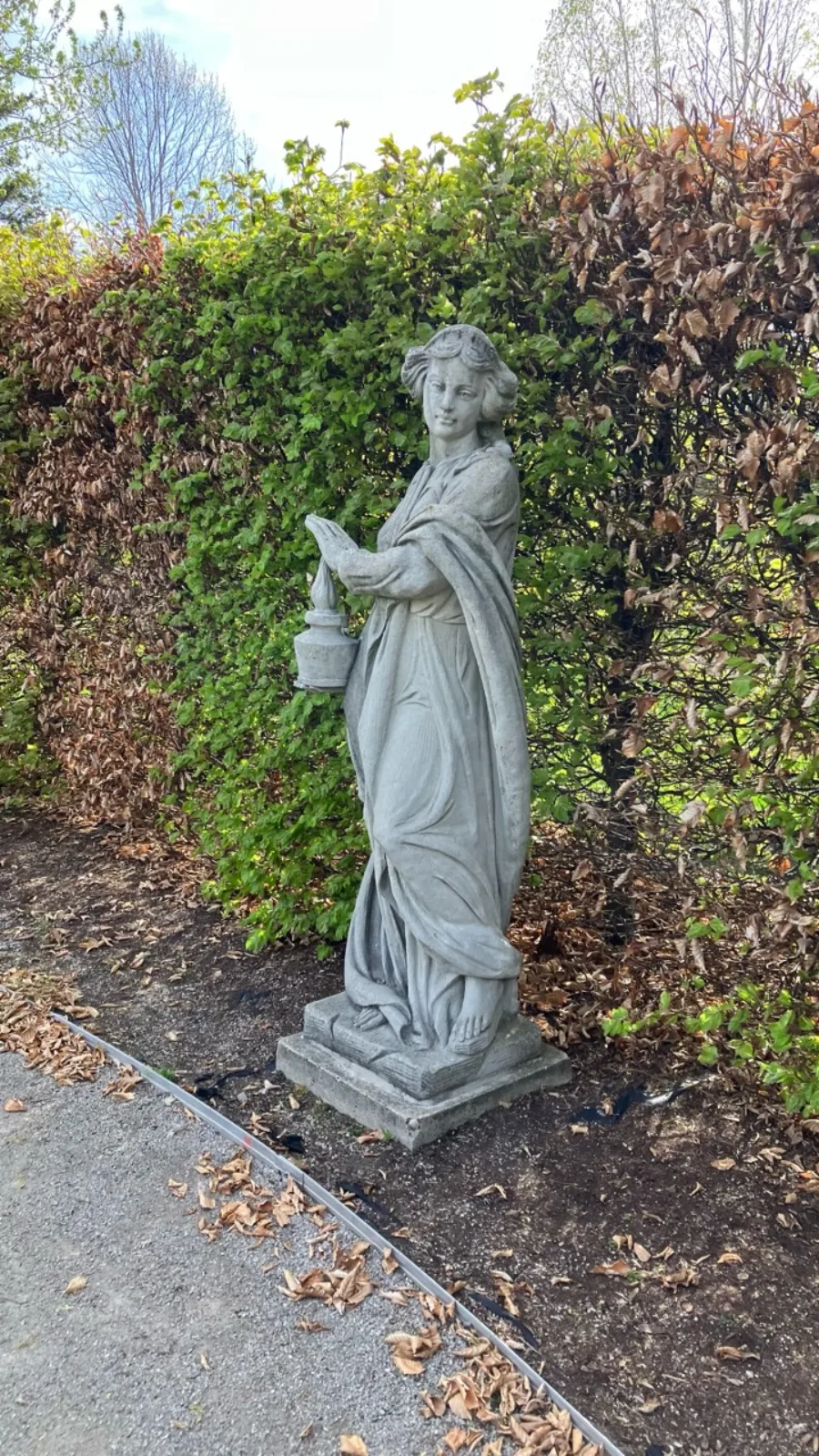
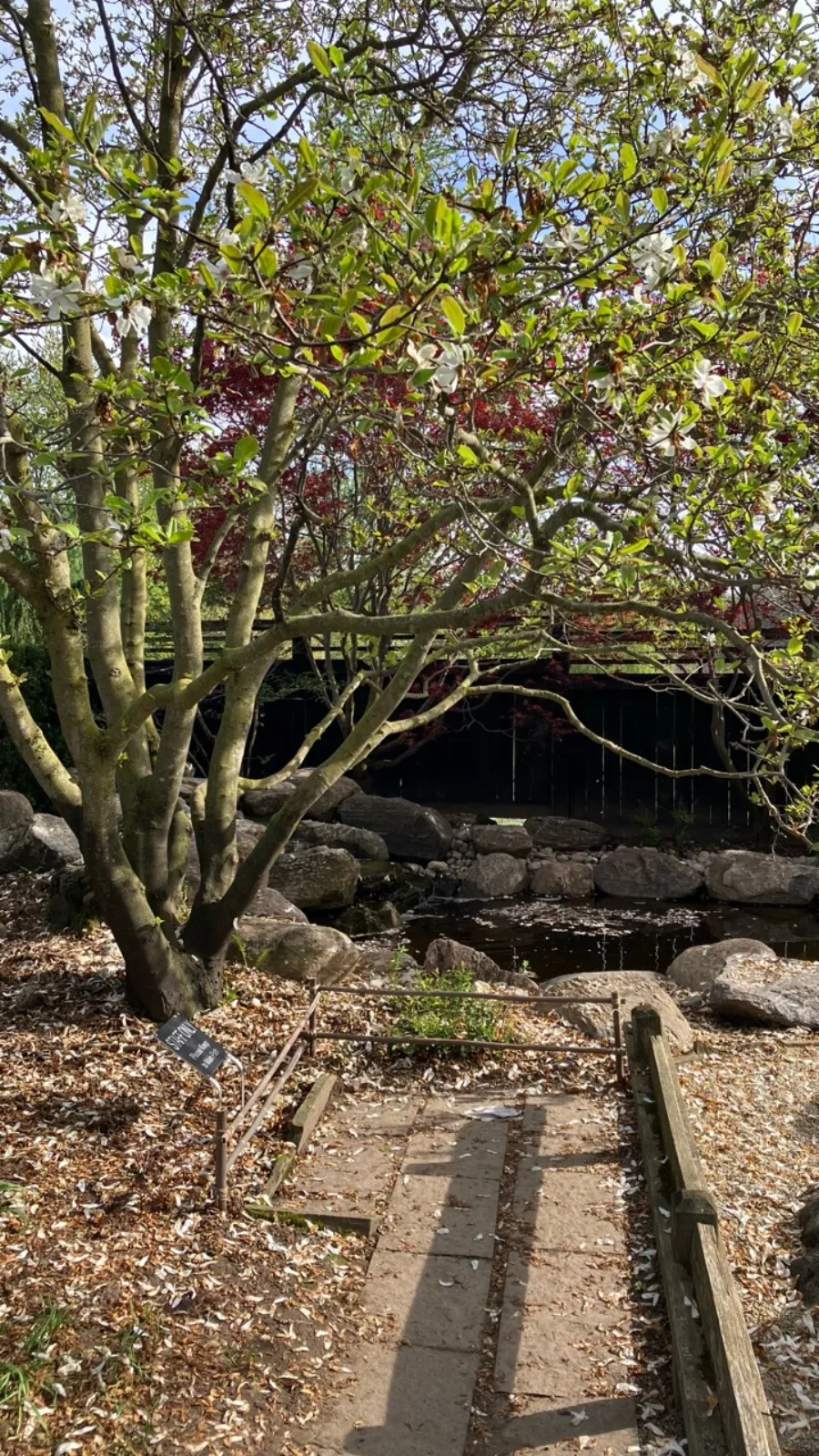
The official Japanese garden is the David G. Porter Memorial Japanese Garden, dedicated in 1995. It adapts Japanese design principles to southern Ontario through hardy substitute plants, a gateway, stone bridge, pond and waterfall, teahouse and dry garden. Other named spaces include the Edna and Frank C. Miller English Garden, Italian Garden, OAC '56 Park in the Garden, Gosling Wildlife Gardens, Rose Garden, Roots and Shoots Garden, Indigenous Tea Garden and Wellington Hospice Lilac Garden.
Beyond the designed gardens, the plant collections include World of Trees and extensive native tree, maple, oak, beech, birch-family, conifer, lilac, linden, rose, serviceberry and hawthorn collections. The Arboretum also protects living genetic collections of more than 30 rare Ontario woody species.
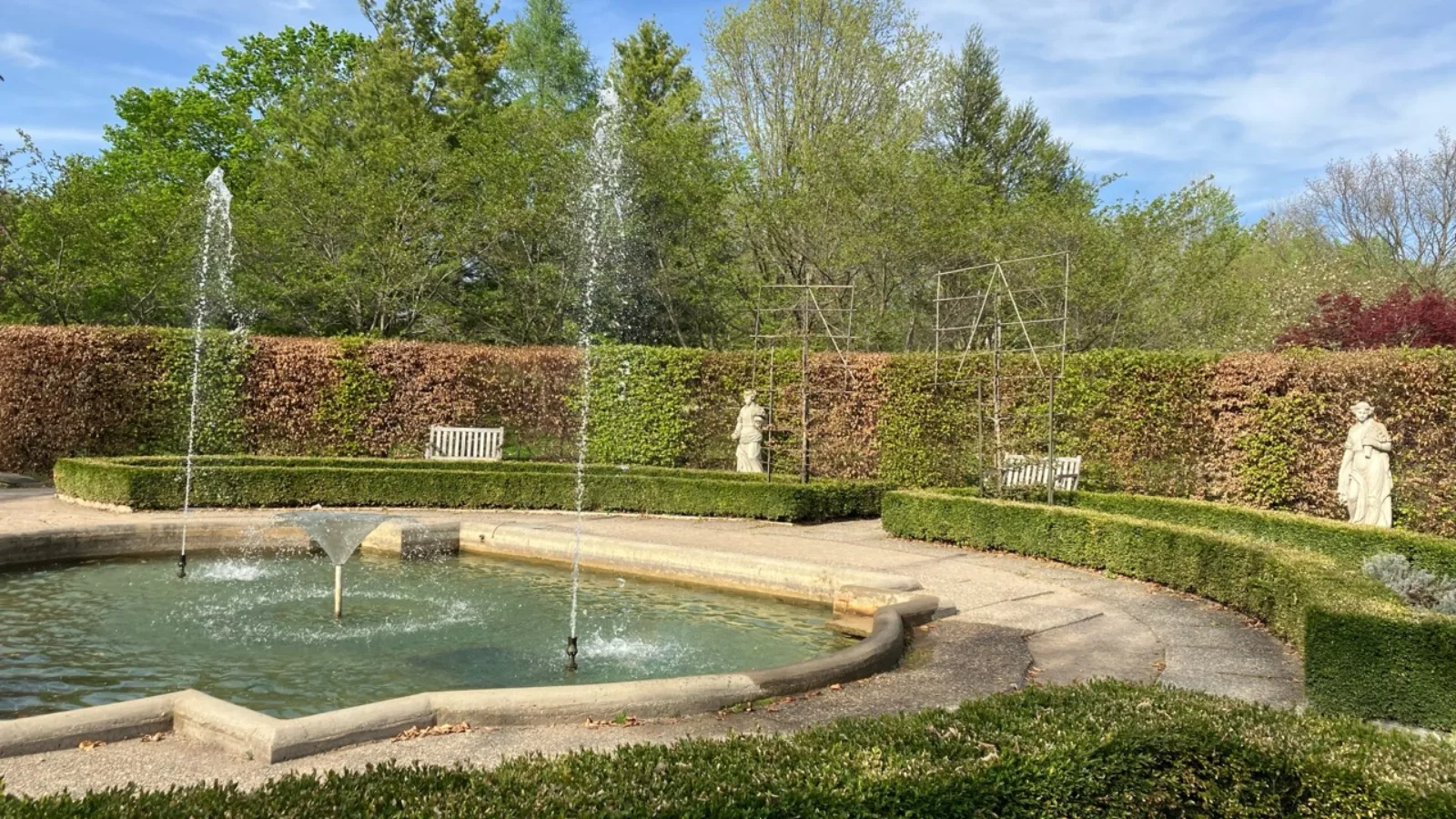
Events, seasons and current construction
The Arboretum hosts guided walks, horticultural programs, nature events and workshops. Some are free, some paid, and many require registration. Spring brings magnolias and tulips; summer fills out the tree canopy; fall suits collection walks; winter makes the branching structure easier to see.
As checked in July 2026, part of the Arboretum Promenade is expected to remain closed until approximately mid-August while the parallel Ivey Trail stays open. Downtown Guelph is also in a multi-year infrastructure project, with intersections and access changing by construction phase. Check both the university and city updates on the morning of your trip.
A practical route
If arriving by train, begin downtown and walk the historic core before lunch. Then use local transit, taxi or rideshare to The Arboretum rather than trying to force the whole distance into a single walk. If driving, park only in designated areas at both stops. Two focused walks—one architectural, one botanical—make a stronger Guelph day than rushing across every campus and downtown attraction.