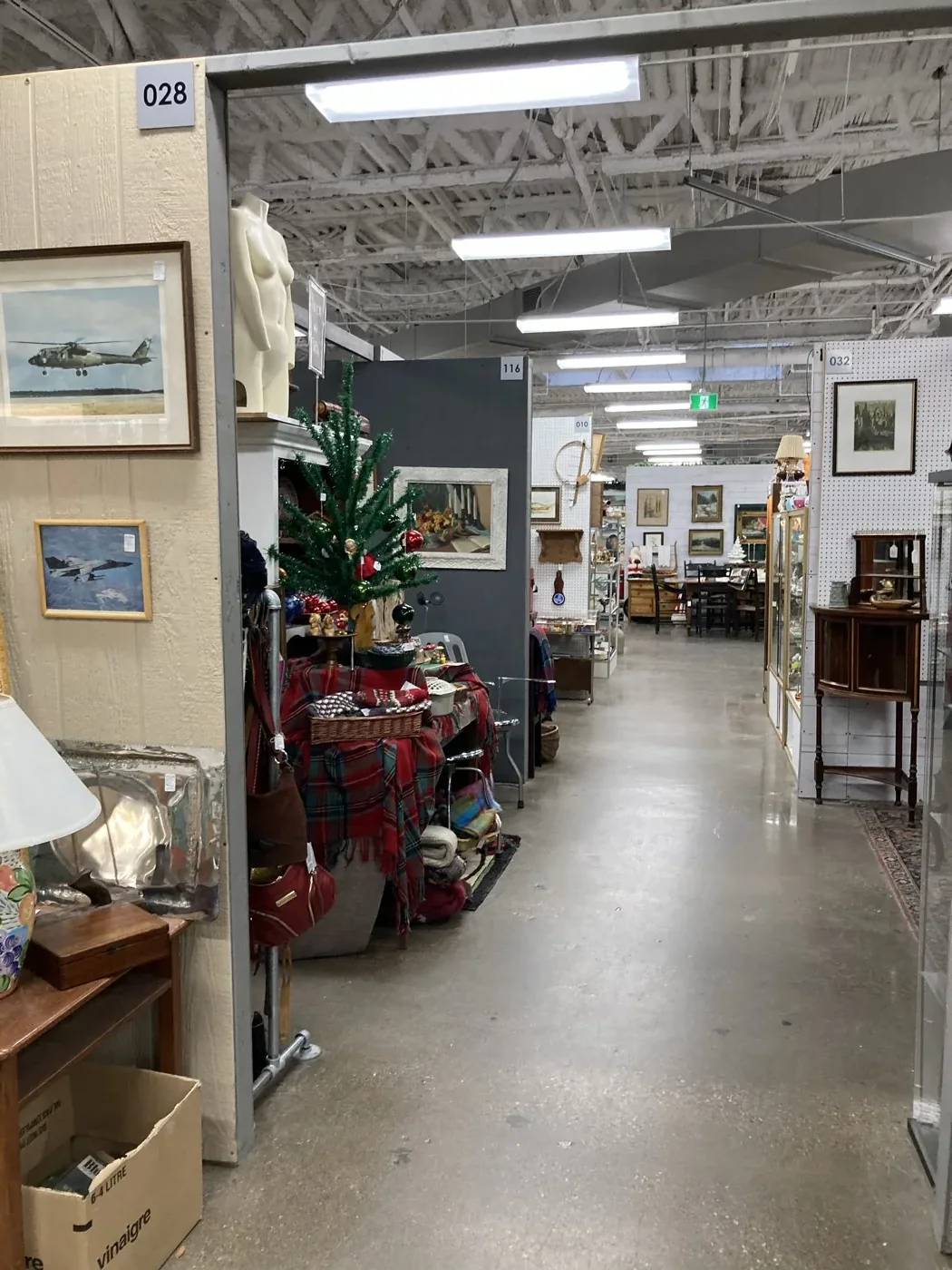
A practical six-stop walk from the train
- VIA Rail Woodstock station, 100 Victoria Street South
- City Hall at 500 Dundas Street and Museum Square
- Woodstock Museum National Historic Site, 466 Dundas Street
- Woodstock Art Gallery, 449 Dundas Street
- Dundas Street shops, coffee and restaurants
- Woodstock Public Library, 445 Hunter Street, then Courthouse Square
Why Woodstock makes a rewarding small-city day trip
The appeal is the concentration of real civic architecture rather than a single blockbuster attraction. Warm stone, buff brick, towers, arched windows and a main street built at pedestrian scale can evoke Europe, but the story is unmistakably southwestern Ontario. This is a good day for visitors who enjoy museums, public art, coffee breaks and looking closely at buildings.
Sources: Tourism Oxford — Woodstock.
Arrive on the Windsor–London–Toronto rail corridor
Woodstock station is at 100 Victoria Street South on VIA Rail's Windsor–London–Toronto corridor. Use VIA's live timetable rather than copying an old departure time. The station is unstaffed and has paid outdoor parking; checked baggage is not offered. VIA lists an accessible entrance and platform, a wheelchair lift and a courtesy wheelchair. A lift request needs 48 hours' notice through 1-888-VIA-RAIL, so arrange assistance before travel.
Sources: VIA Rail — Woodstock station; VIA Rail — Live schedules and train status; VIA Rail — Toronto–London–Windsor timetable.
City Hall and Museum Square establish the civic mood
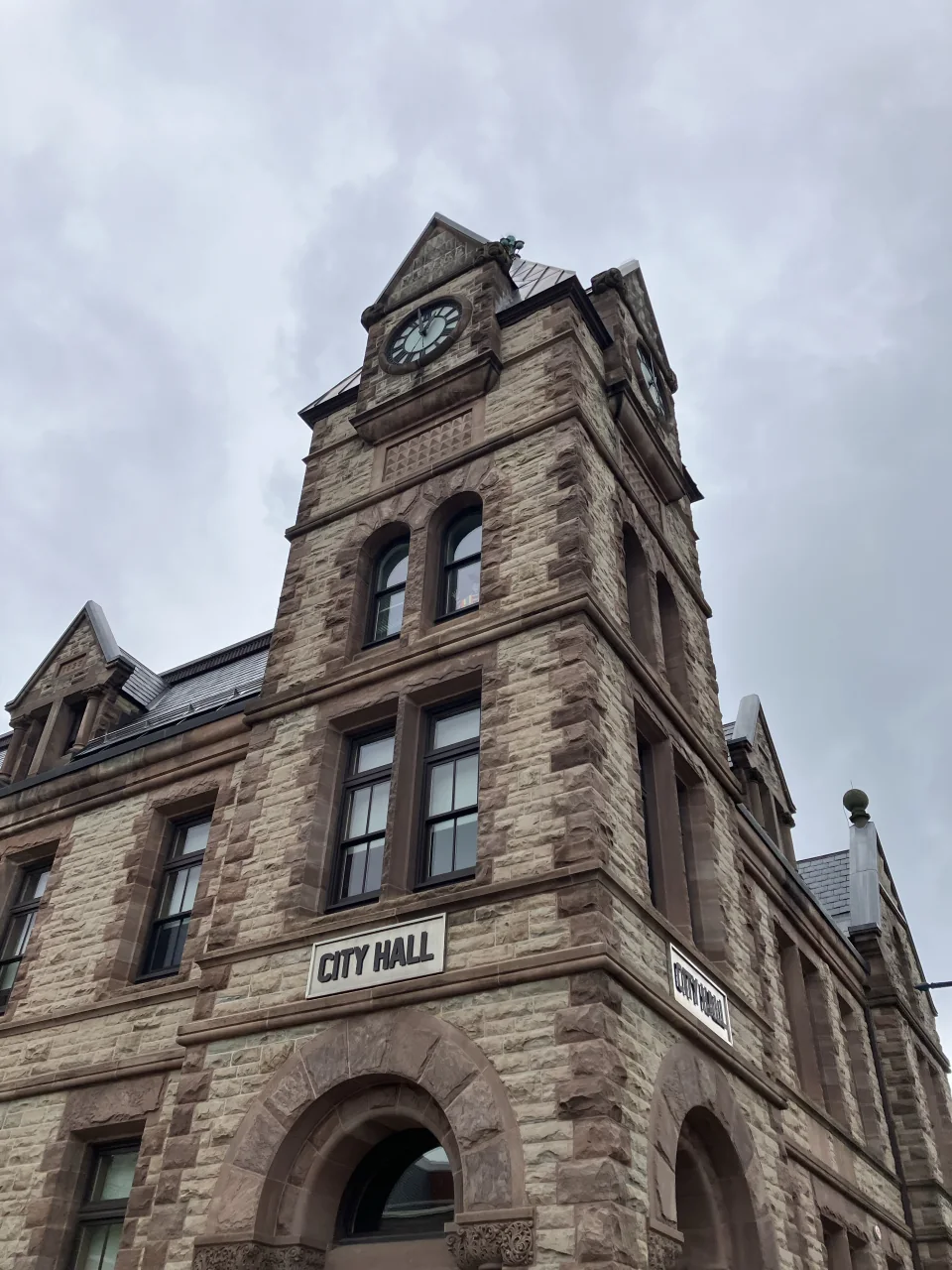
Walk into the centre and begin with City Hall at 500 Dundas Street. The sandstone landmark was built in 1901 as a post office and has served as City Hall since 1968. Its four-faced clock tower and carved stone are a strong first argument for slowing down. Continue east to Museum Square, the landscaped public space in front of the Old Town Hall.
Sources: City of Woodstock — Film Woodstock architecture.
The museum occupies a National Historic Site
Woodstock Museum is at 466 Dundas Street inside the Old Town Hall, built in 1853 and designated a National Historic Site in 1955. The national register calls it a fine colonial adaptation of a British town hall; its Italianate details and combined market-and-meeting-hall plan were adapted to Upper Canadian needs. When checked on August 14, 2026, the museum listed Monday–Saturday 10 a.m.–5 p.m., Sunday closed, admission by donation, automatic doors, an elevator and accessible washrooms. Free two-hour parking is nearby. Check the official Visit page again on the day.
Sources: Woodstock Museum — Visit; Woodstock Museum — Old Town Hall; Canadian Register of Historic Places — Old Woodstock Town Hall; City of Woodstock — Downtown parking.
Read the exhibits as layers of local memory
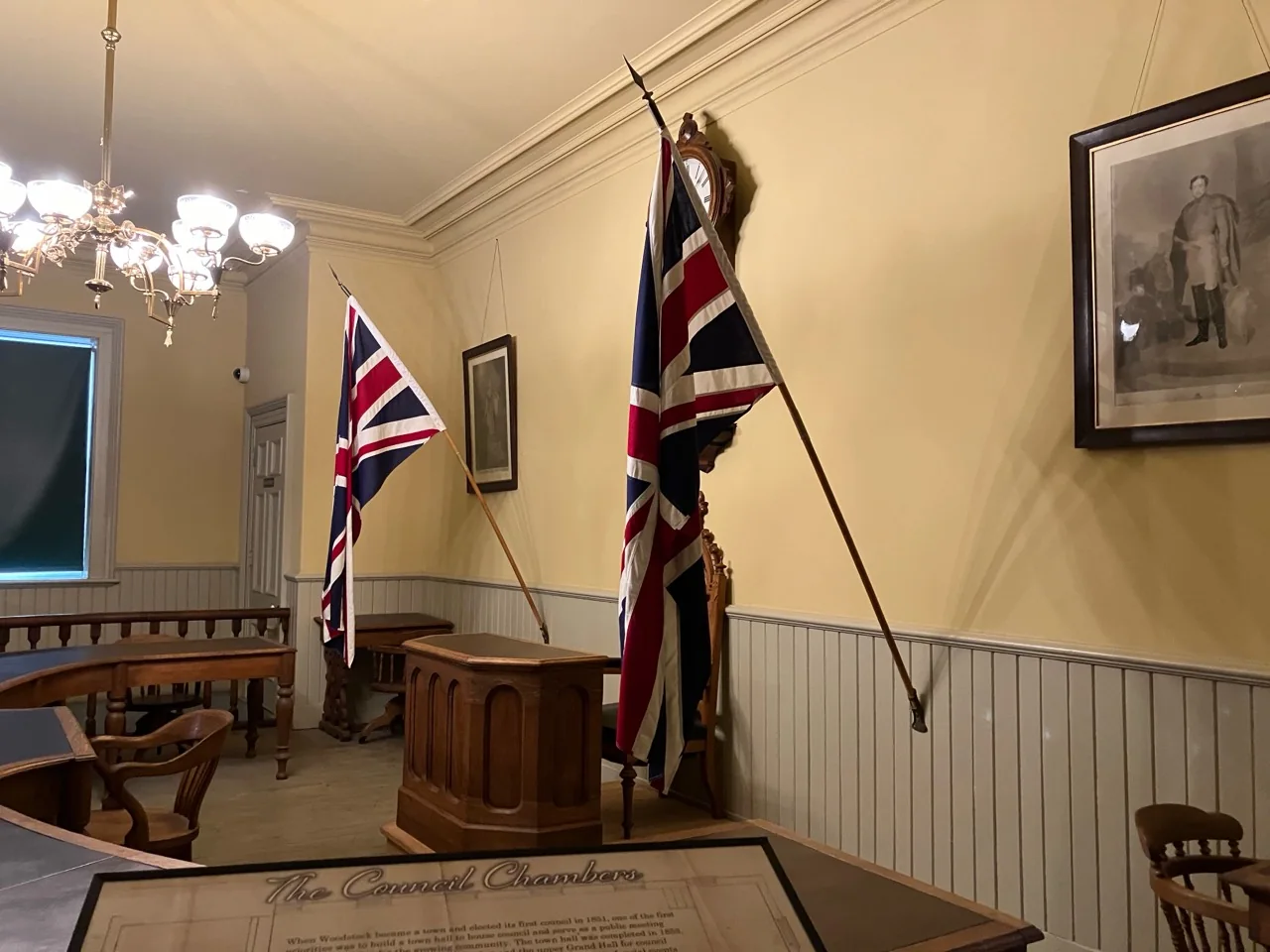
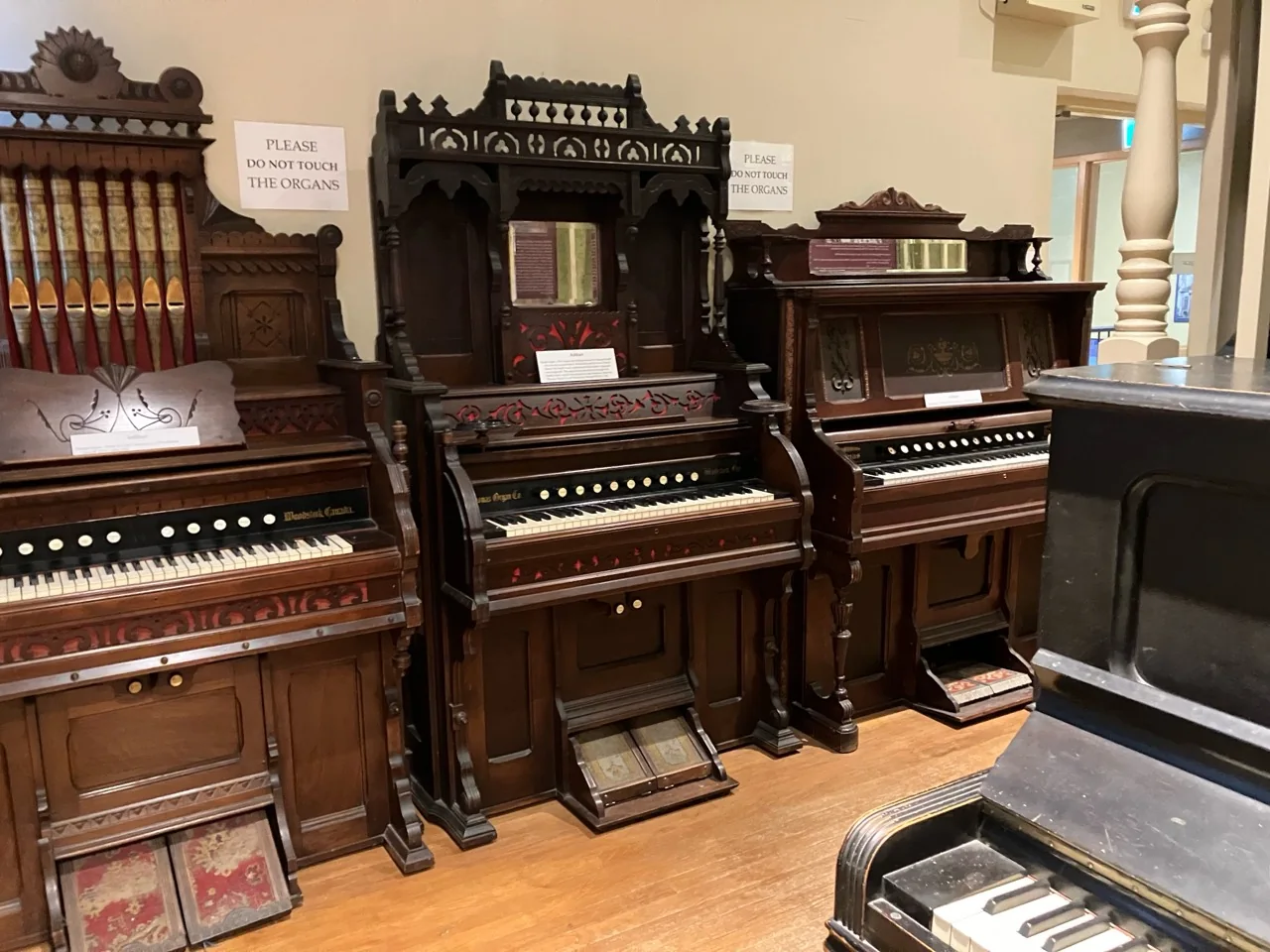
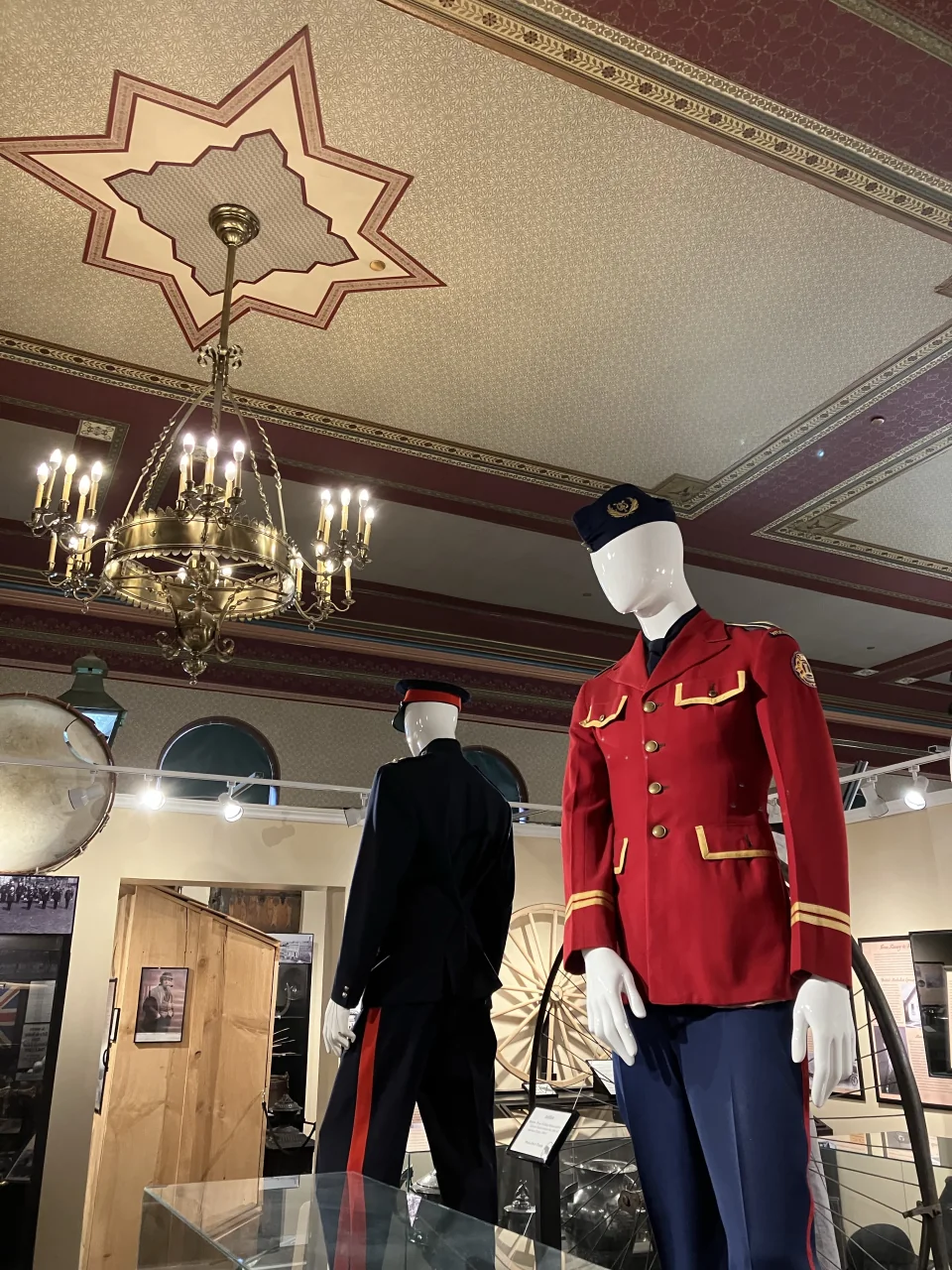
The preserved 1879 Council Chambers is the essential room: furniture, flags and the horseshoe council table make municipal history tangible. On the author's visit, displays also included historic reed organs, uniforms, an illustrated community map and a panel connecting Woodstock's 1951 royal visit with local celebrations for Elizabeth II's 1953 coronation. Exhibitions can rotate, so the photographs document that visit rather than promise that every object will remain on view.
Sources: Woodstock Museum — Old Town Hall.
Cross to the Woodstock Art Gallery
At 449 Dundas Street, opposite Museum Square, the Woodstock Art Gallery occupies three floors of the historic John White Building. Its changing exhibitions place local and regional work beside wider Canadian art, and the gallery cares for the largest repository of Florence Carlyle's work plus her personal archive. When checked on August 14, 2026, its Visit page listed Monday–Saturday 10 a.m.–5 p.m., Sunday closed, admission by donation, automatic doors, an elevator and accessible washrooms on every floor. Confirm current exhibitions and hours before setting out.
Sources: Woodstock Art Gallery — Visit; Woodstock Art Gallery — Florence Carlyle.
Let Dundas Street provide the unplanned part
Dundas Street is Woodstock's main-street pause: older façades, colourful shop windows, restaurants, bakeries and coffee give the route texture between formal heritage stops. Tourism Oxford highlights local coffee roasting, bean-to-bar chocolate and independent food businesses, but openings change. Use the live downtown directory, choose what is actually open, and treat free two-hour street parking as time-limited unless signs say otherwise.
Sources: City of Woodstock — Downtown parking; Tourism Oxford — Woodstock.
Finish at the Carnegie library and Courthouse Square
Woodstock Public Library at 445 Hunter Street was built in 1909 by Toronto architects Chadwick and Beckett with Carnegie funding. Its Classical Revival composition, bichromatic brickwork, balanced windows and round entrance rotunda make it one of the walk's best architectural interiors. From there, continue toward Courthouse Square for public views of the working courthouse and old gaol; respect active civic buildings and photograph from public paths.
Sources: Ontario — Carnegie libraries in Ontario; Tourism Oxford — Woodstock.